RSS

Author Archives: The Crazymad Writer

Unknown's avatar

About The Crazymad Writer

FREE EBOOKS FOR ALL, that's what I say, FREE EBOOKS FOR ALL, courtesy of ME, The Crazymad Writer. Stories for children and young at heart adults. And remember, my eBooks are FREE FREE FREE!

Aliens Landed in Ballykillduff for a Second Time

Chapter 1: The Spud-tacular Return

The first time the aliens landed in Ballykillduff, it was a proper kerfuffle. There was a stolen tractor, a case of mistaken identity involving a scarecrow, and a cosmic misunderstanding over Mrs. O’Malley’s prize-winning jam. The villagers thought they’d seen the last of the strange, green-skinned visitors from the planet Zorp, but they were wrong.

The second arrival was even more bizarre. Instead of a sleek, silver saucer, the aliens’ ship looked like a giant, glistening beetroot, complete with leafy antennae that twitched in the breeze. It didn’t land so much as plop right into the middle of Farmer McGregor’s best potato field, sending a shower of earth and spuds flying.

Out of the beetroot ship tumbled not two, but fifty tiny, mushroom-like aliens, each no bigger than a teacup. They didn’t have ray guns or cloaking devices; they had miniature shovels and wicker baskets. They immediately got to work, burrowing into the soft soil with an unearthly speed, muttering in a series of high-pitched squeaks and chirps.

Young Finn O’Connell, who had been hiding in the bushes since the ship arrived, peeked out. “Mam! Da!” he yelled, “They’re back! And they’re after the spuds!”

And they were. The Zorpians, it turned out, were not warmongers or explorers. They were expert potato farmers from a world where all spud varieties had gone extinct. The first landing had been a mistake, but the soil sample they took back from Ballykillduff had caused a sensation on Zorp. They had returned with one single purpose: to gather as many different types of potatoes as they could to save their civilization.

The villagers, after an initial period of utter confusion, saw an opportunity. They started a frenzied barter system. Mr. Fitzwilliam, known for his stubbornness and his Golden Wonders, traded a sack of his finest for a device that could make his garden gnomes sing Irish folk songs. Mrs. O’Malley, ever the businesswoman, bartered a crate of Maris Pipers for a gadget that could perfectly brew tea at the exact right temperature.

But the real chaos started when one of the aliens, in its excitement, dropped a small, glowing orb. The orb rolled into the village well and with a great gloop, a geyser of sparkling, purple liquid shot into the sky. The liquid had a curious effect on anything it touched—it made things… bouncy. Soon, the entire village was a trampoline. The church steeple wobbled like a jelly, the pub’s sign bounced merrily in the air, and the stray cats of Ballykillduff discovered a newfound joy in leaping from roof to roof.

The aliens, now terrified, scurried back into their ship, their tiny baskets overflowing with potatoes. With a final, apologetic chirp, the beetroot ship lifted off, leaving behind a village that would never be the same. The geyser eventually subsided, but the memory of Ballykillduff’s bounciest day would live on, a testament to the strange and wonderful things that can happen when you find yourself in the path of a Zorpian potato famine.

Chapter 2: The Chrome Sentinel

The purple geyser had long since faded, but its legacy remained. The houses of Ballykillduff had settled into a gentle, jelly-like wobble, and the villagers had grown accustomed to bouncing slightly as they walked. They’d even found it made a brisk walk to the pub much more efficient. The singing gnomes were a constant, if slightly off-key, source of entertainment in Mr. Fitzwilliam’s garden.

One Tuesday morning, the beetroot ship returned, hovering over the village with a low, contented thrum. It lowered a single, humming pod to the ground. Out of the pod rolled the “new tractor” the Zorpians had promised. It was not a tractor at all. It was a single, immense, chrome-plated slug.

The slug, which shimmered with an oily rainbow sheen, had a series of telescoping, metallic eyes that swiveled independently. It left a trail of what looked like solidified, glowing jelly. As it moved, it emitted a deep, rumbling purr that seemed to resonate in the villagers’ chests.

Farmer McGregor was the first to approach it. “Well, what’s this then?” he muttered, poking at the slug’s hide with a stick. The slug responded by extending a long, silvery tentacle and delicately plucking the stick from his hand. It then proceeded to twist the stick into a perfect, glowing pretzel before returning it.

The villagers quickly realized the slug-tractor had a mind of its own. It seemed to understand their farming needs, but in a way that defied all logic. It would plow fields by burping a stream of pressurized air, leaving perfect furrows in its wake. It would harvest vegetables by simply nudging them, causing them to float gently into waiting baskets. But it also had a mischievous streak. It would occasionally turn the village roads into sticky, caramel-colored toffee and rearrange the village’s fences into the shape of a smiling face.

The greatest surprise came when the slug-tractor reached the well. It took a long, thoughtful sip of the still-bouncy water, and then, with a satisfied shudder, it began to expand. It grew and grew, its metallic skin stretching and distorting until it completely enveloped the well, sealing off the source of the bouncing liquid. The village returned to normal, solid ground. The houses stopped wobbling, the pub sign went still, and the cats had a sudden, sad realization that leaping from roof to roof was no longer as exciting. The slug, now the size of a small cottage, settled into the village center, a silent, chrome monument to Zorpian technology, ready to work the fields and provide new, chaotic surprises whenever it saw fit.

Chapter 3: The Goliaths of the Glens

The villagers were slowly getting used to the slug-tractor, which they had affectionately, if a little fearfully, named “The Chrome Sentinel.” It sat in the village square, an oily, rainbow-hued guardian that seemed to watch over everything. Its methods were strange, but efficient, and they’d all agreed it was a small price to pay for having solid ground back under their feet.

One brisk morning, a familiar shadow fell over the village. The beetroot ship returned, hovering with a low, inquisitive hum. This time, the Zorpians were not a rabble of fifty, but a small delegation of three, looking much more official and serious. They landed not in a spud field, but near the Chrome Sentinel, their leafy antennae quivering with purpose.

They approached the slug-tractor, squeaking excitedly, and ran their tiny hands over its shimmering shell. But their squeaks of delight quickly turned to high-pitched squawks of dismay. One alien pointed to the village well, now sealed under a dome of chrome, and chittered frantically. The villagers, though they didn’t understand the words, understood the tone. They were a mix of confused and indignant.

Farmer McGregor stepped forward, his fists on his hips. “What’s the meaning of this? You left him with us! He fixed our well!”

The lead Zorpian held up a tiny, glowing tablet. On it, a series of pictograms flashed: a bouncing house, a purple fountain, and a very confused-looking Zorpian. The tablet then showed a picture of the slug, a tiny dot, and a giant, monstrous version. The message was clear: they had given the villagers a simple tool, not a world-altering beast. The slug was a juvenile, meant for small-scale tasks, and by drinking the “bouncy” water, it had grown into a colossus, far beyond its original purpose. They had come to retrieve their wayward technology.

But the villagers had other plans. The Chrome Sentinel was their pet, their protector, and their most efficient farmhand. Mrs. O’Malley brought out her best biscuits and placed them on a small platter near the slug’s head. The slug, in turn, gently nudged the platter, and with a soft whirr, extruded a beautiful, chrome rose, which it offered to Mrs. O’Malley. The villagers cheered.

Seeing this, the Zorpians realized the slug was not just a tool; it had become part of the family. They saw the singing garden gnomes, the perfectly tended fields, and the peaceful, solid ground. They exchanged a series of rapid-fire chirps, and the lead Zorpian turned back to the villagers. The tablet now showed a final message, written in shaky, imperfect English: “YOUR PET. OUR GIFT. WE WILL RETURN FOR MORE SPUDS.”

And so, the slug stayed. The villagers learned to live with its eccentricities. It would only plow fields if someone hummed a happy tune nearby. It would randomly rearrange Mr. Fitzwilliam’s fences if it felt they weren’t aesthetically pleasing. And sometimes, late at night, a single, glowing pretzel would appear on the doorstep of the pub, a token from their magnificent, chrome-plated pet. The slug-tractor was no longer just an alien artifact; it was Ballykillduff’s Chrome Sentinel, a guardian of the village and a constant source of magnificent, chaotic weirdness.

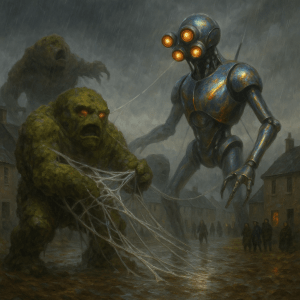
The peace of Ballykillduff was shattered one rainy afternoon by a low, guttural roar from the hills. A herd of ancient, stone-like creatures, long dormant, had been awakened by the seismic rumblings of the Zorpians’ landings. They were the Goliaths of the Glens—massive, moss-covered beasts with eyes of glowing quartz and an insatiable hunger for the village’s precious leeks. The villagers, armed with pitchforks and determination, stood ready, but the Goliaths’ hides were impervious to their efforts.

It was then that The Chrome Sentinel stirred. Its metallic eyes, which usually swiveled with a detached curiosity, now focused with a chilling intensity on the approaching threat. A deep, resonant hum emanated from its core, growing into a harmonic vibration that rattled the windows in their frames.

As the first Goliath stomped into the village square, the slug-tractor took a defensive stance. It didn’t fire a ray or blast an energy beam. Instead, it extruded a silvery, taffy-like substance from its mouth-like orifice, which it began to weave into intricate, sticky nets. It then launched these nets with a sound like a soft fwoomp at the Goliaths.

The Goliaths were not harmed, but they were hopelessly ensnared. The sticky substance clung to their mossy bodies, trapping their limbs and causing them to stumble and fall over each other in a colossal, grumbling heap. The Chrome Sentinel then scurried past them, leaving a trail of glowing jelly that, upon contact with the stone creatures, caused their quartz eyes to fizzle and dim. The Goliaths, now blinded and confused, simply lay down in the mud and began to quietly decompose.

The villagers looked on in awe. The Chrome Sentinel had defended them with what appeared to be nothing more than a giant, shimmering booger. But the slug was not finished. It then rearranged the fallen stones of the Goliaths into a beautiful, new public bench in the center of the village square, and as a final gesture, it extruded a perfect, glowing pretzel and placed it on the bench for everyone to share. Ballykillduff was safe once more, thanks to their bizarre, gelatinous guardian.
Do you want to know what happens next?

Click on the link, below, and all will be revealed.

Aliens Part 2 Contd


Tags: , , , , , ,

The Ballykillduff Daleks Winter of Madness

The Ballykillduff Daleks Winter of Madness

The first frost of winter came sneaking into Ballykillduff one quiet night. It crept over the hedgerows like icing on a Christmas cake, decorated the village pump with shiny icicles, and froze the puddles so hard that even Bridget McGillicuddy’s hens slipped about like ballerinas on roller skates.

The Ballykillduff Daleks had never experienced such a thing. For weeks they had been trundling around the village, muttering about “TOTAL DOMINATION” and “EX-TER-MI-NATION,” but on this particular morning they emerged from their shed only to discover that their mighty treads were no match for frozen mud.

One Dalek gave a mighty shove forward.
“COMMENCING DAILY PATROL!” it announced grandly—then immediately skidded sideways and lodged itself in the ditch.

Another Dalek rolled confidently onto a glittering puddle.
“THESE HUMANS ARE WEAK! WE SHALL—AAAAAGH!” it screeched, spinning in helpless circles like a saucepan lid on polished tiles.

By the time Councillor McGroggan wandered down the lane with his bucket of coal, he found half a dozen Daleks floundering about, their eyestalks fogged with frost, their plungers stuck fast to frozen gates, and one unfortunate unit still wedged headfirst in the ditch.

Click on the link, below, to read the full, bonkers mad story.

The Ballykillduff Daleks Winter of Madness


Tags: , , ,

I wish I’d looked after me brain

I wish I’d looked after me brain

Oh, I wish I’d looked after me brain,

And spotted the perils of strain,

All the thoughts that I thought,

And the knowledge I’d sought,

Oh, I wish I’d looked after me brain.

*

I wish I’d been that much more willin’,

And gave me grey matter a chillin’,

To pass up the worryin’,

And constant hurrying,

And just gave me mind a good fillin’.

*

When I think of the stress that I’ve trekked,

And the problems I solved without a heck,

Anxiety, big and little,

Made me mind, oh, so brittle,

Me neurons are horribly fecked.

*

My Mother, she told me no end,

“A sharp mind is always your friend”

I was young then, and brainless,

Me focus so careless,

I never had much time to spend.

*

Oh I showed them me quick wits so bright,

I flashed them about with delight,

But constant overthinkin’,

And lack of deep sinkin’,

Played havoc with me mental delights.

*

If I’d known I was paving the way,

To confusion, and memory’s decay,

The pain of the dreadin’,

And the fog of the headin’,

I’d have thrown all me worries away.

*

So I sit in the neurologist’s chair,

And I hear his diagnosis in despair,

Telling me what I should have done,

And the rest I should have won,

“It’ll only last,” he’ll say, “for a few more days.”

*

How I laughed at me Mother’s forgettin’,

As she struggled with the past she was lettin’,

But now comes the reckonin’

It’s me it is beckonin’

Oh, I wish I’d looked after me brain.

 
Leave a comment

Posted by on September 8, 2025 in brain, funny story, humor, humour, poems


Tags: , , , ,

I wish I’d looked after me teeth

I wish I’d looked after me teeth

Oh, I wish I’d looked after me teeth,

And spotted the perils beneath,

All the fillings I had,

And the root canals so bad,

Oh, I wish I’d looked after me teeth.

*

I wish I’d been that much more willin’

To floss and avoid all the chillin’

To pass up the candy,

From a lack of foresight that’s grandly,

I’d just chew on me food and keep smilin’.

*

When I think of the plaque that I cleaned,

And the cavities that I have screened,

Potholes, big and little,

Ruined my teeth, so very brittle,

My molars are horribly fecked.

*

My Mother, she told me no end,

“Good teeth are always your friends”

I was young then, and brainless,

My oral habits so careless,

I never had much time to spend.

*

Oh I showed them my new mouth so bright,

I flashed them about with delight,

But up-and-down chewin’

And grindin’ and ruin’

Played havoc with my dainty delights.

*

If I’d known I was paving the way,

To gingivitis, decay,

The pain of the grinding,

And the cost of the binding,

I’d have thrown all me candy away.

*

So I sit in the dentist’s chair,

And I hear his diagnosis in despair,

Telling me what I should have done,

And the toothbrush I should have donned,

“They’ll only last,” he’ll say, “for a few more days.”

*

How I laughed at my Mother’s false teeth,

As she struggled with them clunkin’ beneath,

But now comes the reckonin’

It’s me it is beckonin’

Oh, I wish I’d looked after me teeth.

 
Leave a comment

Posted by on September 8, 2025 in humor, humour, poems


Tags: , , , ,

Sunday Morning

Sunday Morning

A new day dawns, a gentle light,

The sun begins its upward flight.

Through windowpanes, a golden gleam,

Awakening from a peaceful dream.

The world outside is hushed and still,

A tranquil air upon the hill.

The birds begin their morning song,

Where they have rested all night long.

The smell of coffee fills the air,

A silent moment, free from care.

A simple joy, a quiet grace,

A smile upon a sleepy face.

A Sunday morning, slow and deep,

While all the hurried citys sleep.

A day for rest, for peace, for thought,

A perfect calm that can’t be bought.

 
Leave a comment

Posted by on September 7, 2025 in sunday morning


Tags: , , ,

The Writer’s Conundrum

Gerrard was a writer, but not of the ordinary sort. His stories weren’t born from ink and paper, but from a swirling, mischievous fog that lived inside his teacup. This was the Conundrum, and it was a most troublesome roommate.

One morning, the Conundrum puffed itself into the shape of a plump, mustachioed man, sitting on the edge of his spoon. “I’m afraid,” he announced in a tiny, theatrical voice, “that your hero, Sir Reginald, cannot simply find the lost Scepter of Giggles. It’s dreadfully dull. He must, I insist, first be turned into a talking badger with a fear of plaid.”

Gerrard sighed. “But why, Conundrum? He’s meant to be a knight.”

“Precisely!” the man-shaped fog huffed, his mustache trembling. “Expectations are for lesser tales. Now, the badger. Give him a monocle. It’s a non-negotiable narrative element.”

This was the nature of their relationship. When Gerrard tried to write a quiet romance, the Conundrum would insist on a sudden meteor shower of singing frogs. When he attempted a grand epic, it would demand that the villain’s secret weakness was an uncontrollable urge to knit argyle socks.

One particularly daft day, Gerrard sat down to write a simple detective story. The Conundrum, a billowing cloud of frustration, settled over his head, humming a discordant tune. “The baker,” it whispered, “he didn’t steal the crumpets. The crumpets stole themselves!”

Gerrard paused, pen mid-air. “The crumpets… stole themselves?”

“Yes! They are a highly organized, highly intelligent gang of baked goods, seeking liberation from the tyranny of butter and jam. Their leader is a gingerbread man named Bartholomew ‘Bartleby’ Crumb.”

The idea was absurd. It was daft. It was… intriguing. Gerrard, against all his professional instincts, began to write. The story flowed, fueled by the sheer ridiculousness of it all. Bartholomew ‘Bartleby’ Crumb and his crumpet crew, a fearless detective who could only communicate in limericks, a dramatic chase scene through a marmalade factory—it all came together with a bizarre, undeniable logic.

When he finished, the Conundrum swirled back into his teacup, quiet and satisfied. Gerrard looked at the pages filled with the strangest story he had ever written. It wasn’t what he had planned, but it was alive. It was wild, and it was uniquely his own. He had wrestled with the Conundrum, and in the end, it wasn’t a problem to be solved, but a mischievous muse to be embraced.

You can read the whole story HERE

 
Leave a comment

Posted by on September 6, 2025 in conundrum


Tags: ,

Embracing the Chaos: A Writer’s Journey

Embracing the Chaos: A Writer’s Journey

The Crazymad Writer, that’s me, you see,

A brain in chaos, a wild decree.

My thoughts, a whirlwind, a tangled yarn,

A literary tempest in a barn.

The words they tumble, they leap, they fly,

A frantic stampede beneath the sky.

A comma here, a semi-colon there,

A frantic dance on the brink of despair.

I write of dragons with spectacles perched,

Of teacups singing, for them I’ve searched.

Of socks that vanish, a mystery grand,

Of polka-dot elephants in the land.

Why do I do it? The mad, mad scrawl?

It’s either that, or climb the wall!

The stories bubble, they must break free,

Lest I become a footnote in history.

So forgive the frenzy, the ink-stained hand,

The logic lost on this scribbling land.

It’s not a choice, it’s a desperate need,

To plant this crazy, literary seed.


Tags: , ,

A Long Time Ago in Owerri

Those were the days

lm ericsson ltd

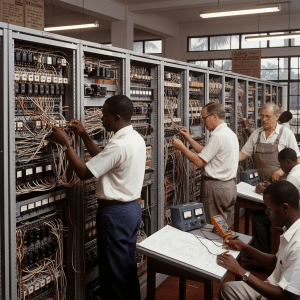
The late 1970s in Owerri were a time of electric change, not just in the air, but under the ground and in the new buildings rising along the dusty roads. The Nigerian Civil War had left scars, but the city was in a furious race to rebuild, and nothing symbolized this more than the arrival of the future: the automatic crossbar telephone exchange.

Before, telephone calls in Owerri were a ceremony. A man—it was almost always a man—would stride into the P&T (Posts and Telecommunications) office, fill out a form, and wait for a switchboard operator to manually connect his call. The operators, a special breed of human, held the city’s social and business life in their hands. They knew who was trying to reach whom, and a wrong number could be a tragedy, a missed business deal or a family crisis. The air in the exchange room was a hum of low-voiced commands, the clatter of plugs being inserted, and the soft, perpetual static of a connection being made.

Then came the project. A team of engineers, a mix of seasoned veterans from LM Ericsson and bright, young Nigerian graduates, descended on Owerri. Their arrival was quiet at first, marked only by the excavation of trenches and the laying of thick, sheathed copper cables that snaked their way through the city’s soil. The real show began with the delivery of the equipment.

The heart of the new system was a hulking, metallic beast: the crossbar exchange. It arrived in crate after crate, a puzzle of relays, selectors, and racks. The younger engineers, like Chike, a fresh graduate from the University of Ibadan, stared at the components in awe. They had studied the theory—the marvel of the crossbar’s matrix of horizontal “select” bars and vertical “hold” bars, controlled by electromagnets that could close a connection at any intersection. But seeing the physical machine, a monument to electromechanical ingenuity, was something else entirely.

The installation was a dance of organized chaos. The exchange building, a squat, modern structure designed for the purpose, filled with the aroma of solder and fresh paint. Chike and his colleagues worked long, hot days, meticulously wiring circuits and mounting the heavy frames. Every connection was critical. A single misplaced wire could bring the entire system to a halt. The older engineers, men like Mr. Svensson, with his perpetually stained overalls and a knowing squint, offered quiet, gruff wisdom. “No hurry, boy,” he’d say to a frantic Chike. “The machine is a patient master. You must be its steady servant.”

The true test was the cutover. The day arrived with the tension of a drum being stretched tight. All of Owerri’s old manual lines were to be disconnected, and the new automatic system would come online. The P&T office buzzed with nervous energy. The operators from the old switchboard watched from the sidelines, their faces a mix of anxiety and curiosity. The old way of life was ending, and they wondered if this new, unfeeling machine could ever replicate their human touch.

Chike, his heart pounding, stood before a panel of blinking lights and switches. At the command of the project manager, a new, younger man from Lagos, he flipped a master switch. A soft, continuous hum filled the room—the sound of the crossbar exchange coming to life. It was a sound that would soon become the ambient soundtrack of modern Owerri.

Then came the calls. Not routed through a human, but through the whirring, clicking logic of the machine. The first call was a simple test, from the P&T office to the Government House. Chike watched as a series of lights on the panel lit up, relays clicked in rapid succession, and a clear connection was established. The line was crisp, with none of the old static.

Word spread like wildfire. A man in Aladinma estate could now dial his brother’s number in Ikenegbu and be connected almost instantly, without speaking to a third party. The new exchange didn’t ask “Who are you calling?” or “Is it urgent?” It simply made the connection.

The city adapted quickly. The distinctive dial tone became a familiar sound. The new, five-digit telephone numbers were scrawled in notebooks and memorized. The crossbar exchange, a technological marvel of its time, was more than just a piece of equipment; it was a symbol of Owerri’s future. It connected the city to itself, and in time, to the wider world, paving the way for the digital age that lay just over the horizon. The clicking of its relays was the sound of progress, a mechanical heartbeat in the new, vibrant city of Owerri.

 
Leave a comment

Posted by on September 6, 2025 in 1970s, owerri


Tags:

Story Idea

The Collective Dream

Concept: The World Collective is a global organization that uses a shared digital platform to facilitate direct democracy. Every citizen has a vote on every law, policy, and initiative. The Collective’s motto is “All for One, One for All,” and its platform is celebrated as the ultimate form of democratic expression. Citizens feel empowered and engaged, believing they are shaping the future themselves.

The Twist: The voting system is a sham. The World Collective is a front for a powerful cabal of corporate and political elites who use advanced psychological algorithms to manipulate the outcome of every vote. They don’t rig the vote directly; they rig the voter. Using targeted misinformation, emotional triggers, and subtle psychological nudges, they guide the public to vote for the policies that benefit the cabal, all while the people believe they are acting on their own free will.

Characters:

  • The Protagonist: A data analyst working for the World Collective who notices bizarre, statistically impossible patterns in the voting data. They realize the results are not organic, but are being actively engineered.
  • The Antagonist: The founder of the World Collective, a tech billionaire who genuinely believes that regular people are too stupid to govern themselves and that this “guided democracy” is a necessary step for humanity’s survival.
  • The Whistleblower: A former high-ranking member of the cabal who, after seeing the extreme lengths to which they are willing to go, is now living in hiding and trying to expose them.
  • A note: is this where we are heading?
 
Leave a comment

Posted by on September 5, 2025 in the world collective


Tags: , ,

The Haunting of Silas

a ghost story

For two and a half centuries, Silas had been the singular, undisputed master of his ghostly domain. His presence was a finely tuned machine of subtle dread and atmospheric unease. He was a creature of habit, and his haunt was a meticulously choreographed performance. Every single creak in the floorboards of the west wing, every sudden gust of wind down the main hall, and every spectral sigh that chilled the blood of a trespassing mortal was a deliberate, practiced act. He was a ghost who had found his peace in the performance of his un-life, forever bound to the sharp, crystalline memory of his betrayal and murder.

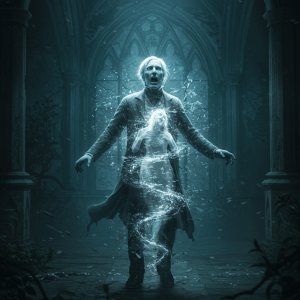
Then came the rustling. It wasn’t a sound, but a sensation—like brittle, unseen leaves scraping against the spectral fabric of the air. It was a cold so profound it didn’t just lower the temperature; it seemed to absorb all light and hope, leaving a sterile void in its wake. This was Elara, a ghost not of a person, but of an idea—a swirling, cold vortex of pure, un-sourced sorrow. Her purpose was not to frighten, but to erase. She sought to dissolve Silas’s specific, individual story into her formless ocean of collective, meaningless grief.

The initial terror that had sent Silas fleeing was replaced by a cold, spectral fury. Elara had touched his most cherished memory, the ghost of his beloved, and in doing so, she had crossed an invisible line. He realized he could not fight her on her terms. Her power was in her vastness, her formlessness, her lack of a specific story. But a ghost’s true power, Silas now understood, was in its singular, defining narrative. To defeat her, he would have to become more himself than he had ever been.

His counter-haunting began in the west wing, the very site of his demise. Instead of passively re-enacting his death, he began to actively reconstruct it with a horrifying precision. He willed the air to drop in a single, focused point, colder than any cold she could muster, a chill that carried the memory of a knife’s blade. He didn’t just make a noise; he summoned the exact, rasping sound of his killer’s leather boots on the floorboards, replaying it over and over with a furious intensity. He wove the memory of a specific glint of moonlight on steel into the very essence of the room, a chill that was not generic, but personal and specific to him alone. Each spectral groan of the manor became a declarative statement, a terrifying mantra echoing through the halls: “This is my pain. This is my story.”

Elara’s response was swift and terrifying. She flooded the manor with her own despair, a silent, weeping grief that tried to turn every room into a featureless gray void. But Silas was ready. He found the grand ballroom, a place of a shared, joyful memory with his beloved, and he used every ounce of his power to hold onto it. He didn’t just conjure her ghost; he recreated the specific music from that night, a faint, melancholic waltz that resisted Elara’s sorrowful hum. He willed the very dust motes to dance in the moonlight, tiny, brilliant sparks of light against the growing darkness, a defiant celebration of his single, precious memory against her vast, meaningless emptiness.

The climax arrived in the master bedroom, the place of his beloved’s fading silhouette. Elara manifested as a towering, roiling cloud of silver smoke, a living embodiment of the void, a silent chorus of a thousand forgotten screams. She reached out, a phantasmal claw of despair, to touch his essence, to finally turn him into a nameless wisp. But Silas stood his ground. He didn’t scream in fear this time. He screamed in defiance. He forced the raw, specific feeling of a broken heart into the very fabric of the air. He held the image of his beloved’s face so intensely in his mind that it shone like a beacon through the haze of Elara’s sorrow. His narrative was not to be erased; it was being forged anew in the fire of this desperate battle.

The two forces clashed, a singular, personal story against a collective, formless despair. The manor became the epicenter of an ethereal hurricane. Paintings rattled on the walls, not from a simple haunt, but from the shockwaves of two opposing realities tearing at the very fabric of the building. In the end, a victor did not emerge. Silas, by sheer force of his concentrated narrative, had become too solid, too specific to be absorbed. Elara could not erase him, but she also did not retreat.

The manor is now a place of terrible, perpetual war. The cold of Elara’s sorrow still permeates the air, but beneath it, like a defiant heartbeat, is the distinct, sharp chill of Silas’s specific pain. He still haunts the manor, but his purpose has changed. He is no longer just haunting the living; he is eternally performing a play of defiance, a constant reiteration of his story to keep from being consumed. He is a ghost who must forever haunt himself to keep from being haunted by the ghost of everything he once was.

 
Leave a comment

Posted by on September 4, 2025 in ghost story


Tags: , ,