RSS

When the President of Ireland met the Ballykillduff Daleks

When the President of Ireland met the Ballykillduff Daleks

When the President of Ireland met the Ballykillduff Daleks

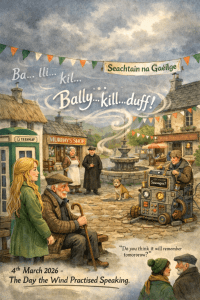
The presidential motorcade, usually a beacon of solemnity, was currently attempting a precarious three-point turn in a field that smelled distinctly of prize-winning Kerry cows. Inside, President McMurrow, a man whose silver hair and kindly eyes belied a mischievous wit, chuckled. “Remind me again, Fiona,” he addressed his chief of staff, “why we bypassed the usual diplomatic channels for a direct engagement with… the Ballykillduff Daleks?”

Fiona, a woman who had seen it all – from rogue shamrock presentations to international incidents involving a missing Taoiseach and a particularly enthusiastic hurling team – sighed. “Because, Mr. President, their ‘Exterminate All Humans’ manifesto was getting an alarming amount of traction on TikTok, and Fine Gael were starting to panic about the youth vote.”

Just then, a shrill, metallic voice screeched from beyond the hawthorn hedge. “EXTERNAL-LIN-GUISH! EX-TER-NAL-LIN-GUISH THE GRAZING MENACE!”

“Ah,” President McMurrow adjusted his tie, a subtle nod to the seriousness of the occasion. “Sounds like our welcoming committee.”

They emerged to a truly surreal sight. Five Daleks, unmistakably Daleks, but with a distinct Ballykillduff charm. One had a tricolour painted rather crudely on its side. Another wore a tiny, ill-fitting leprechaun hat. The leader, a particularly rusty specimen, had what looked suspiciously like a hurley stick strapped to its casing.

“GREET-INGS, FLESH-BAG!” screeched the hurley-wielding Dalek. “WE ARE THE DA-LEKS OF BALLY-KILL-DUFF! PRE-PARE TO BE… ENTER-TAINED!”

President McMurrow raised an eyebrow. “Entertained, you say? Not exterminated?”

“EX-TER-MIN-ATE IS SO… LAST SEA-SON,” replied another Dalek, its eye-stalk swivelling to glare at a sheep that had dared to bleat nearby. “WE HAVE DE-CID-ED TO EM-BRACE LO-CAL CUL-TURE!”

It turned out their TikTok fame had come from their surprisingly viral Riverdance routine. “WE HAVE MOD-I-FIED OUR PLUN-GERS FOR PER-CUSS-IVE DANC-ING!” explained the Dalek with the leprechaun hat. “WOULD YOU LIKE A DEM-ON-STRA-TION, MR. PRES-I-DENT?”

Before McMurrow could answer, a local farmer, Seamus O’Malley, ambled over, scratching his head. “Are these the fellas who keep rearrangin’ my hay bales into the shape of the Millennium Falcon?”

The Daleks froze. “NEG-A-TIVE! THAT IS A SLAN-DER-OUS AC-CU-SA-TION!”

“Oh, come off it,” Seamus scoffed. “My prize-winning ram, Brendan, saw you! Said you were humming the Star Wars theme tune!”

President McMurrow, struggling to suppress a laugh, intervened. “Gentlemen, perhaps we could discuss your, ah, ‘cultural integration’ over a cup of tea? I believe Fiona has brought some Tayto.”

The word ‘Tayto’ seemed to short-circuit the Daleks. “POT-AT-O BASED SNACK PROD-UCT? EX-PLAIN! EX-PLAIN!”

Hours later, the presidential motorcade departed, leaving behind a scene of utter bewilderment and joy. The Ballykillduff Daleks were now sporting tiny GAA jerseys, had learned to play a passable bodhrán rhythm with their plungers, and were eagerly discussing the merits of cheese and onion crisps versus salt and vinegar.

 
Leave a comment

Posted by on December 15, 2025 in daleks, Ireland, president


Tags: , , , ,

Charles in Wonderland

Charles in Wonderland

One crisp autumn morning in 2025, King Charles III was tending to his organic gardens at Highgrove House, muttering to his beloved plants about the virtues of sustainable composting. “You see, my dears,” he said to a row of heirloom tomatoes, “one must nurture the soil as one nurtures the realm.” But as he bent down to inspect a particularly plump specimen, the ground trembled. A mischievous baby hippopotamus—escaped from the Windsor Safari Exhibit and inexplicably drawn to the royal compost heap—barreled through the hedges like a living cannonball.

Before Charles could exclaim “Good heavens!”, the hippo, whom he later dubbed Sir Splashalot, scooped him up with its snout and charged toward a peculiar rabbit hole that had appeared out of nowhere amid the flowerbeds. “Unhand me, you aquatic rascal!” the King shouted, but it was too late. With a mighty leap, Sir Splashalot plunged into the hole, carrying His Majesty tumbling down, down, down into a swirling vortex of colors and chaos. The crown tilted crookedly on his head, his ceremonial sceptre flailing like a conductor’s baton in a hurricane.

They emerged not in a burrow, but splash-landing in a vast, upside-down river where the water flowed uphill and fish swam through the air like birds. This was no ordinary Wonderland—it was a topsy-turvy realm called Blunderland, where logic took tea breaks and absurdity reigned supreme. Charles, drenched and disheveled, clung to Sir Splashalot’s back as the hippo paddled merrily through the rapids. “Where on earth—or rather, where off earth—are we?” he gasped.

Their first encounter was with a flock of floating teapots that bobbed along the riverbank, each spouting riddles in steamy whispers. “Why is a monarch like a leaky kettle?” one hissed. Before Charles could ponder, a new character emerged: the Jittery Jester, a lanky figure in polka-dotted pajamas with bells that jingled out of tune. The Jester was no fool; he was Blunderland’s self-appointed tour guide, cursed to rhyme everything he said. “Welcome, oh soggy sovereign, to this land of flip and flop! To escape the river’s wrath, you must hop atop a mop!”

With a twist of fate, the Jester handed Charles a glowing mop that doubled as a raft. But as the King mounted it, Sir Splashalot sneezed a mighty bubble, propelling them into a forest of candy cane trees where the leaves tasted like peppermint but turned your tongue invisible. Here, they met the Grumbling Gardener, a rotund gnome with a beard of living vines that whispered secrets. “Plants don’t talk back in your world, eh?” the Gardener grumbled, pruning a bush that shaped itself into royal portraits. “Mine do—and they’re plotting a revolution against the squirrels!”

Charles, ever the environmentalist, tried to mediate. “Perhaps a spot of diplomacy? Organic treaties?” But the vines entangled him, glowing with mischievous energy, and suddenly he shrank to the size of a thimble. Sir Splashalot, now gigantic in comparison, looked down with wide eyes. “This won’t do,” Charles declared, his voice a squeak. The Grumbling Gardener laughed. “Eat the glowing berry, Your Tiny Majesty, but beware—it might make you merry… or hairy!”

Swallowing the berry in desperation, Charles ballooned to the height of a giraffe, his crown now a comically small hat on his enormous head. Twisting through the forest, they stumbled upon a mad banquet hosted by the Queen of Quiches, a flamboyant ruler with a crown of crusty pastry and a court of animated desserts. “Off with their crusts!” she bellowed at intruders, but upon seeing Charles, she curtsied dramatically. “A fellow royal! Join our feast of folly—today’s menu: upside-down cake that makes you walk on ceilings!”

At the table, Charles met more new characters: the Whispering Wombat, a furry philosopher who debated existential questions in haikus (“Hippo runs wild / King seeks homeward path / Chaos laughs last”), and the Ticklish Troll, who guarded a bridge made of tickle feathers. The feast turned chaotic when the quiches rebelled, squirting custard at everyone. In the melee, Charles discovered a hidden twist: the Queen was actually his long-lost corgi, Fluffington, transformed by Blunderland magic! “Woof—I mean, Your Majesty?” the dog-queen yipped. “I’ve been ruling pies since that portal mishap last equinox!”

But no time for reunions—a sudden storm brewed, summoned by the Mischievous Water Sprites, tiny impish beings with wings of waterfalls and grins like whirlpools. They danced around the banquet, splashing illusions that turned the food into wriggling eels. “Play our game or stay forever!” they chorused. The game? A riddle relay where answers twisted reality. Charles, shouting in alarm, guessed wrong on the first: “What has a crown but no kingdom?” (He said “A tooth,” but it was “A bottle of ale.”) Reality warped, and suddenly Sir Splashalot could fly, lifting them all into the stormy jungle chaos above.

Soaring through thunderclouds that rained jellybeans, they crash-landed in the Lair of the Labyrinth Lizard, a serpentine beast with scales of shifting mazes. “To pass my test,” the Lizard hissed, “navigate my belly—it’s a puzzle of portals!” Inside the lizard’s maze-like innards, Charles faced twists galore: rooms that looped time, making him relive his coronation backward; mirrors that swapped personalities (briefly turning him into a hippo and Sir Splashalot into a king); and a chamber of forgotten dreams where he debated climate policy with ghostly versions of world leaders.

Emerging victorious but dizzy, Charles uncovered a shocking twist: Blunderland wasn’t a separate world—it was a dreamscape created by his own overworked mind, fueled by too much late-night reading of Lewis Carroll and worrying about parliamentary sessions. But wait—another turn! The Jittery Jester revealed he was actually a time-traveling advisor from 2050, sent back to “loosen up” the monarchy with absurdity. “Your reign needs whimsy, sire! Or it’ll crumble like dry scones.”

As the group fled a horde of chasing clockwork crocodiles (summoned by the Lizard’s sore loser tantrum), they reached the Exit Vortex—a swirling portal guarded by the final new character: the Benevolent Banana, a wise fruit sage who peeled away illusions. “To return,” it intoned, “admit one mad truth.” Charles, crown still crooked, shouted, “Riding a hippo is the best way to travel!”

With a pop and a whirl, they tumbled back to Highgrove. Charles awoke in his garden, Sir Splashalot (now just a normal escaped hippo) munching tomatoes beside him. Was it all a dream? Perhaps—but his sceptre was sticky with jellybeans, and a single water sprite winked from a puddle before vanishing.

From that day on, King Charles ruled with a touch more madness: royal decrees included “Hippo Holidays” and tea parties with talking plants. And if you listen closely in the gardens, you might hear the faint jingle of a Jester’s bells, reminding all that even kings need a dash of Blunderland in their lives.

 
Leave a comment

Posted by on December 14, 2025 in king charles, Wonderland


Tags: ,

The Aeroflot Star

The Aeroflot Star

Flight of the Aeroflot Star
***************************

Above the tarmac, where the city sprawls,
A silver arrow answers distant calls.
Not linen smooth, but canvas rough and deep,
Where frantic strokes the promised speed do keep.

The Concordski, a vision white and sleek,
Ascends a sky the Master’s hands did speak.
In impasto clouds, the blue and ochre blend,
As frantic swirls around the vessel bend.

A roar that rips the oil-thick, heavy air,
A dream of travel, born of Soviet care.
The sweeping brush-strokes on the wings are caught,
A contrail bright with fire that the burners brought.

Below, the watchers, dark and small they stand,
Gazing upon the wonder of the land.
But higher still, where light and texture gleam,
Flies CCCP-77110 in a painted dream.

A swirling vortex of the painter’s mind,
A rush of speed for all of humankind.
A supersonic brush upon the breeze,
Across a sky of textured, painted seas.

 
Leave a comment

Posted by on December 12, 2025 in concorde, concordski


Tags: ,

Round the World Race

Round the World Race

In the height of supersonic rivalry, the Grand Circumnavigation Race was announced. It pitted the two greatest achievements in aviation against each other: the elegant British-French Concorde, sleek and refined, and the powerful Soviet Tupolev Tu-144, broad-winged and unyielding.

Everyone in the West was certain Concorde would win. Newspapers proclaimed her the superior machine, more efficient in cruise, with advanced engines and graceful design. Pilots and experts toasted her superiority. “The Tu-144 is crude and overpowered,” they said. “It may boast raw speed, but it will break before the finish.”

The race circled the globe: from London to New York, across the Pacific to Tokyo, over Siberia to Moscow, south to Cape Town, across the Atlantic to Rio, and back to London. These supersonic giants needed no ordinary stops, pushing the limits of fuel and endurance at twice the speed of sound.

The starting signal echoed over Heathrow. Concorde surged ahead first, her droop nose rising confidently, afterburners glowing blue.

Moments later, the Tu-144 roared into the sky from a nearby airfield, her canard wings steady, engines thundering with raw power.

Over the Atlantic, Concorde pulled far in front. Her crew relaxed as she chased the sun westward. But then came fierce storms, with icing and turbulence that tested every system. Concorde’s refined airframe struggled; one engine faltered, forcing a careful slowdown and precious time lost while the crew managed the issue.

The Tu-144 pressed on relentlessly. Built tougher for harsh conditions, she shrugged off the ice and maintained speed, gaining ground as she crossed the Pacific ahead.

In Tokyo, Western observers grew anxious. Concorde closed the gap with flawless performance, and for a stretch over the north, the two flew close together. Pilots exchanged respectful waves across the divide.

Rivalry intensified with navigation challenges over vast deserts, where heat mirages and instrument glitches led Concorde off course for hours, chasing false readings.

The Tu-144 stayed true, her robust systems and determined pilots guiding her straight through, extending the lead.

Over Africa, severe headwinds and high-altitude strains pushed both to their limits. Concorde climbed elegantly but lost efficiency in the thin air. The Tu-144 powered upward with brute force, breaking through and holding her advantage.

As the English Channel appeared, Concorde mounted a final charge, closing fast in the dawn light. Crowds below watched breathless. But the Tu-144 had endured every trial, emerging stronger. With one last surge, she crossed the finish line first, landing in London amid stunned silence that erupted into applause.

The West had been so confident. Yet heart, toughness, and raw capability triumphed over refinement and expectation. From that day, aviators told the tale: sometimes the bold underdog, forged in challenge, flies farthest when the journey demands the most.

And on clear nights, witnesses swear they still see two silver shapes racing the skies, eternal rivals turned legends.

 
Leave a comment

Posted by on December 12, 2025 in concorde, Tu-144


Tags: , , , , , ,

Old Elf and the Dragon

Old Elf and the Dragon

Fle and the Obsidian Sky-Weaver

The air tasted like crushed silver and distant thunder. Below them, the valley of the Winding River was painted in the soft, bruised colours of twilight, where mushroom-capped towers and luminous flora dotted the emerald cliffs.

Fle, the Old Elf, sat tall upon Kaelen, the Sky-Weaver, his emerald robes catching the last amber rays of the setting sun. Fle’s face was a map of ages, his eyes holding the patient light of a thousand moons, but his grip on the dragon’s jeweled harness was firm. He was guiding Kaelen through the Veil of the Shifting Dusk, the narrow passage between the mortal realm and the High Dreaming.

Kaelen, whose scales were an armour of deep, shimmering teal and night-sky black, did not flap his colossal wings with brute force. He moved with a mystical grace, riding the invisible currents that flowed from the Rainbow of Eld arching high above them—a phenomenon that only appears when a creature of pure elemental magic and a being of profound age travel together.

“The Gem of Constant Dawn,” Kaelen’s thought resonated, deep and guttural, in Fle’s mind, “lies just beyond that cloud-bank, where the river meets the mist. But the Silence has claimed it.”

“The Silence,” Fle murmured, pulling his hood closer, “is fear, Kaelen. It is the dread that paralyzes creativity. And it has used the Gem to still the music of the World-Heart.”

Their mission was perilous: The Gem of Constant Dawn, which normally sang the world into existence every morning, had been stolen and wrapped in the Web of the Soul-Moths, creatures of pure, paralyzing inertia. If the Gem was not freed by midnight, the sun would rise only as a suggestion, and the world would remain perpetually quiet, perpetually grey.

As they flew past the floating, crystalline peaks, Fle reached into a hidden pouch woven into his sash and withdrew three small items:

  1. A feather from a thought-bird, which allowed him to hear the whispers of possibility.
  2. A shard of frozen laughter, which could break the densest concentration of sorrow.
  3. A single, petrified tear of a nymph, which held the warmth of summer.

They broke through the last cloud layer. There, floating motionless above the swirling mist, was the Gem—a sphere of blinding, imprisoned light, tightly encased in thick, silvery cobwebs. And hovering around it were the Soul-Moths, silent, dark insects whose flapping wings emitted a negative sound that drained the air of hope.

Kaelen stopped, hanging suspended in the air. “I cannot approach, Old Friend,” he admitted. “My fire is too loud, my being too grand. The Silence would snuff me out like a candle.”

“Then we shall be quiet,” Fle replied, his voice barely a breath.

He slipped off Kaelen’s back and, rather than falling, began to descend slowly on a column of shimmering, green energy—the focused memory of every happy song he had ever heard.

As he neared the Gem, the cold of the Silence hit him. His memories felt heavy, his purpose uncertain. He could feel the Soul-Moths trying to wrap his own thoughts in their numbing web.

Fle raised his hand and opened his palm. He did not cast a spell; he simply released the shard of frozen laughter.

The laughter shard—the captured echo of a thousand innocent giggles—didn’t explode. It simply melted, forming a thin, high chime. The sound was so unexpected, so pure and non-serious, that the Soul-Moths paused, momentarily confused.

In that fraction of a moment, Fle used his second item: he took the thought-bird feather and gently tickled the Web of the Soul-Moths. The Moths, overwhelmed by the sudden influx of chaotic and funny possibilities, flew away in disarray, unable to process the illogical joy.

The Gem of Constant Dawn was now free, but still cold and muted. Fle pressed the petrified tear of the nymph against the crystalline sphere. Instantly, the warmth of all past summers infused the Gem. It flared, shining with a light that pushed back the twilight and sent a vibrant, resonant thrum through the entire valley.

Above, Kaelen roared—a sound that was now one of pure, unrestrained elemental joy. The Rainbow of Eld above them deepened in colour, and the Winding River below seemed to sing as the music of the World-Heart returned.

Fle rose back to Kaelen’s side, weary but successful. “The Silence is broken, my friend. Let us fly home. It’s been a long age.”

Kaelen dipped his great head in agreement. With a powerful beat of his massive wings, he turned toward the dawn, carrying Fle, the keeper of memory and laughter, out of the high, mystical air and back toward the newly singing world.


Tags: , , , , ,

The Pointing Elf

The Pointing Elf

Fle was not your average elf. For one, he was ancient, with a beard that could rival a white waterfall and ears so long they sometimes tripped him if he wasn’t careful. For another, he didn’t live in a sparkling, forest-canopy palace or a cozy mushroom home. No, Fle resided in the rather pungent, yet undeniably magical, depths of the “Finest Fertilizer Mine.”

Now, this wasn’t just any fertilizer. This was magical fertilizer, dug from the very bowels of the earth where forgotten spells congealed and ancient dragon sneezes settled. It made grumpy gnomes grow sunflowers taller than mountains, turned barren desert into candy floss forests, and once, famously, made a flock of sheep spontaneously learn opera.

Fle’s job was simple: dig. And point. He believed the pointing was crucial. “You see, my dear saplings,” he’d croak to the tiny, bewildered pixies he occasionally conscripted for help, “the pointing directs the inherent whimsy of the earth towards the digging! Without proper pointing, you might just unearth… well, an old boot. And who wants that?”

One Tuesday, a particularly vibrant Tuesday where the air smelled faintly of blueberry muffins and old socks, Fle was pointing with gusto. “Hark! The earth beckons!” he declared, gesturing wildly with a gloved hand. His shovel, lovingly named ‘Sparkle-dig,’ plunged into the soil. Instead of the usual shimmering, nutrient-rich earth, he hit something solid.

“Aha!” Fle exclaimed, convinced it was a particularly stubborn clump of enchanted compost. He dug around it, grumbling about the lack of respect for ancient digging techniques. Suddenly, the ground beneath him began to rumble. The “Finest Fertilizer” bags around him, filled with their magical contents, started to jiggle ominously.

“By the beard of Merlin’s mushroom!” Fle cried, momentarily forgetting to point. The solid object beneath him wasn’t a clump of compost. It was a giant, petrified, disco ball. And it was waking up.

With a final, earth-shattering thump, the disco ball erupted from the ground, sending Fle and his bags of fertilizer flying. It spun, glittering with a million tiny mirrors, illuminating the mine with a kaleidoscope of color. Funk music, surprisingly loud and bass-heavy, started to emanate from it, shaking the very foundations of the mine.

Fle landed rather ungracefully in a pile of “Not For Sale” fertilizer (which, ironically, was the most potent). He brushed himself off, adjusted his crooked spectacles, and stared at the pulsating disco ball. The pixies, who had thankfully scampered off at the first rumble, peeked back in, their tiny eyes wide with wonder.

“Well,” Fle mused, stroking his magnificent beard, “that explains the blueberry muffins. And the old socks, I suppose.” He then began to point at the disco ball with renewed vigor. “Now, if we can just harness this… this luminescent boogie… imagine what it could do for the petunias!” The pixies, sensing a new, undeniably absurd, magical project, began to hum along to the funk, already envisioning disco-dancing daisies. And so, the Finest Fertilizer Mine gained a new, shimmering, and exceptionally loud, resident.

*******************************************************************


The Pointing Elf: Fle and the Funk of the Fertilizer

Fle, the ancient elf, stood proudly on a giant sack of “Super-Grow Garlic Granules,” pointing with focused intensity at the colossal, glittering disco ball that had taken up unwelcome residence in the center of the Finest Fertilizer Mine.

“Listen up, you minuscule mischiefs!” Fle boomed, his voice echoing over the steady, bass-heavy thrum emanating from the sphere. The pixies—who had taken to wearing tiny reflective hats—were bobbing their heads in time with the funk. “The goal is synchronization! We must harmonize the whimsy of the earth with the inherent groove of this giant, petrified party favor!”

His plan was, naturally, absurdly complex. It involved a series of copper wires salvaged from a forgotten goblin telegraph, a repurposed ladle, and several yards of elasticated pixie-pants (for conductivity, Fle insisted). The objective was to channel the disco ball’s pure funk energy into a special, highly volatile batch of fertilizer: The Rhythm Compost.

“Remember the rules, team!” Fle adjusted his spectacles, which were now flickering with reflected light. “One: Always point towards the whimsy. Two: Never, under any circumstances, allow the funk to touch the opera sheep. We don’t need a chorus of ‘Baa-ss Nova’ again. Three: If you hear pan pipes, run.”

For three glorious, bass-filled days, Fle and the pixies worked. The mine was transformed into the world’s funkiest excavation site. The digging equipment vibrated with the beat, the walls pulsed, and even the air seemed to shimmer with purple and turquoise light.

Finally, the Rhythm Compost was complete. It was a shimmering, dark green mixture that pulsed with a faint, irresistible beat.

“The test, my dear saplings! The test!” Fle announced dramatically, scooping a tiny pinch onto a sickly-looking fern that had been drooping pathetically in the corner.

The fern twitched. Then it straightened. Then, to the astonishment of all, it began to breakdance.

It spun on its roots, popped and locked its fronds, and finished with a flourish, striking a dramatic pose.

“Success!” cried Fle, doing a surprisingly spry jig on the sack of garlic granules. “The Rhythm Compost works! Imagine the agricultural implications!”

But then, disaster struck. The fern, overwhelmed by the funk, started growing violently. It burst through the mine ceiling, transforming into a towering, rhythmically-shaking jungle of floral power. The fern’s breakdancing moves caused powerful tremors, sending dust, rocks, and, worst of all, an avalanche of Super-Grow Garlic Granules cascading down onto the disco ball.

Krrrr-ZAT!

The contact was catastrophic. The highly pungent granules, combined with the pure funk energy, caused a massive magical feedback loop. The disco ball didn’t just spin; it began to levitate, pulling the entire mine with it!

“RUN, PIXIES, RUN!” shrieked Fle, forgetting the pan pipe rule and resorting to common sense.

The last anyone saw of the Finest Fertilizer Mine was a colossal, earth-caked, funk-blasting disco ball soaring into the sky, dragging the mine’s contents behind it. Fle, clinging precariously to his giant sack of garlic, was still pointing.

“I still maintain,” he shouted into the rushing wind, adjusting his beard, “that the pointing was necessary! The whimsy is simply outside the earth now!”

And somewhere, far below, a flock of opera sheep looked up, suddenly feeling an inexplicable urge to compose a power ballad about disco lighting and airborne agriculture.

 
Leave a comment

Posted by on December 11, 2025 in magical, mine


Tags: , , , ,

Alice and the Case of the Unexpectedly Swift Hippo

Alice and the Case of the Unexpectedly Swift Hippo

Alice and the Case of the Unexpectedly Swift Hippo

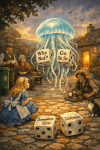
“Faster, Barnaby, faster!” squeaked Alice, clinging desperately to the leathery hide of her unusual steed.

Barnaby, who was, to be perfectly clear, a baby albino hippo wearing a tiny, slightly crooked monocle, did not need encouraging. He was currently tearing across a very normal-looking riverside meadow—which was, of course, absolutely unacceptable for a meadow adjacent to Wonderland—with the speed and grace of a terrified washing machine. His little legs pumped like pink pistons, and his substantial body bounced alarmingly, causing Alice’s blonde hair ribbon to stream out behind her like a distressed banner.

“We must retrieve the Duchess’s runaway teacup!” she yelled, her voice vibrating from the sheer velocity. “It’s got all her important thoughts in it! Specifically, the one about why flamingos are structurally unsound as croquet mallets!”

Barnaby snorted, a sound that was half sneeze and half submerged tuba, causing his monocle to slip precariously over his eye. He did not slow down, mostly because he believed the patch of particularly lush clover just ahead held the secret to solving his life’s great mystery: “Do my toes have a collective name?”

The absurdity had begun precisely three minutes earlier when Alice, having narrowly avoided a philosophical debate with a disgruntled caterpillar about the proper use of semicolons, stumbled upon Barnaby trying to organize a pile of damp pebbles by their emotional state.

“Excuse me,” Alice had said politely, “but are you running away from something?”

Barnaby had looked up, adjusted his monocle, and declared, “On the contrary, Miss. I’m running towards the inevitable conclusion that I am an under-appreciated dramatic prop in this entire affair! Also, a teacup just rolled past me. It was humming something by the Mad Hatter, which is simply poor form for porcelain.”

And so, the chase was on.

They thundered past a family of hedgehogs attempting to build a miniature, functional guillotine out of biscuits. They leaped over a giant chessboard where the Queen of Hearts was having a surprisingly mild-mannered argument with a pawn about dental hygiene.

“It’s catching up!” cried Alice, glancing over her shoulder.

“Nonsense!” shouted a small, reedy voice from inside her pocket. It was the Duchess’s teacup, which had, apparently, decided to reverse course and hitch a ride on Barnaby’s tail before Alice noticed. “I’ve been here the whole time! I just wanted to see if the view was better from the back of a moderately athletic ungulate! Now, if you please, I need to get back to the Duchess before she tries to substitute the March Hare for a serving dish!”

Barnaby, hearing the word “ungulate,” skidded to a halt in a cloud of dust and slightly bruised daisies. He turned his wide, innocent, pink face back to Alice.

“Did I just hear someone refer to me as an ungulate?” he asked, deeply offended. “I’ll have you know, I am a pachyderm! A magnificent, mud-loving pachyderm! And now that the philosophical dilemma has been resolved, I shall revert to my natural pace of ‘ponderously waddling to the nearest body of water to look thoughtful.'”

Alice sighed, slid off the hippo’s back, and neatly caught the monocle before it hit the ground. She tucked the teacup safely under her arm.

“Well, Barnaby,” she said, giving his moist snout a pat. “That was entirely too much excitement for a Thursday. Now, if you’ll excuse me, I believe I need to find a nice, quiet rabbit hole where nothing makes sense but everything is at least stationary.”

Barnaby simply smiled, the picture of serene, monocled pachyderm wisdom. He then slowly, carefully, and with great dignity, rolled into the river and sank immediately out of sight, leaving only a single, enthusiastic bubble.


Tags: ,

Sir Splashalot

Sir Splashalot

It all began that morning at Buckingham Palace, when King Charles received an urgent memo from the Royal Beastmaster: “Your Majesty, the baby hippopotamus has arrived from the Commonwealth as a coronation gift. Tradition demands the monarch mount the creature for the ceremonial blessing.”

Charles, ever dutiful, assumed this was one of those ancient protocols no one had bothered to update since the days of Henry VIII. “Very well,” he sighed, adjusting his crown (which was already slightly crooked from a minor tussle with a corgi earlier). “One doesn’t like to break with tradition.”

The zookeeper, trembling with excitement, led him to the royal enclosure where Sir Splashalot—a deceptively cute, round, and utterly unstoppable baby hippo—was wallowing in a mud bath. A small velvet mounting block had been provided, complete with the royal cipher embroidered on it.

With the dignity befitting a sovereign, Charles ascended the block, sceptre in one hand, robe carefully arranged. The plan was simple: sit sidesaddle for thirty seconds, wave regally, dismount. A photographer stood ready.

But Sir Splashalot had other ideas.

The moment Charles’s royal posterior made contact with the hippo’s broad back, the creature mistook the weight for the signal to launch into his daily sprint for snacks. With a joyous bellow that sounded suspiciously like “WHEEE!”, Sir Splashalot exploded forward.

Charles’s polite “I say—” turned into a full-throated shout of alarm as the mounting block toppled, the photographer dove for cover, and the King found himself clinging to a galloping hippo in full coronation regalia, crown now at a 45-degree angle, sceptre flailing like a jousting lance.

And that, dear reader, is exactly how His Majesty ended up charging through the royal grounds atop a baby hippopotamus—because no one dared tell the King that the “ceremonial mounting” tradition was actually invented five minutes earlier by an overenthusiastic intern.

 
Leave a comment

Posted by on December 11, 2025 in king charles


Tags: , , , ,

Tupolev Tu-144

Tupolev Tu-144

The sky over Ramenskoye airfield was the color of old steel the day the Silver Arrow woke up.

Her name was not painted on her nose like the Western planes; the Soviets had no taste for such sentimentality. But in the quiet hours when the ground crews slept, the mechanics swore they heard a low, metallic whisper from the hangar: Yaстребица—Yastrebitsa—the Hawk-Girl. That was the Tupolev Tu-144’s secret name, the one she gave herself.

She remembered everything. The thunder of her first takeoff in 1968, two months before the Concorde dared the same. The pride of outrunning the West. The bitter taste of 1973, when her sister-ship tore herself apart over the Paris Air Show and the world laughed. After that, the passenger flights were few—only a hundred or so, carrying mail and cosmonauts and nervous Party officials who pretended not to be afraid. Then came the long silence, the museum chains, the slow rust of being forgotten.

But chains are only iron, and iron remembers fire.

One winter night in 1985, a storm came down from the Arctic with teeth of lightning. A stray bolt struck the old hangar roof and danced along the lightning rods, down the steel cables, into the bones of the sleeping supersonic bird. Something ancient stirred inside her titanium skin—something older than Kuznetsov engines or Soviet five-year plans. A fragment of star-metal, welded into her spine during construction, a meteorite the designers had kept for luck. The lightning kissed it awake.

Yastrebitsa opened her eyes—four round windows that glowed faint turquoise—and felt the sky calling her name.

She did not ask permission.

At 3:17 a.m. the hangar doors groaned open by themselves. The guards saw only a shimmer of heat haze and the sweep of delta wings against the moon. By the time the alarms screamed, the Silver Arrow was already climbing through ten thousand meters, afterburners painting the night with white fire. She left behind a sonic boom that shattered every window for twenty kilometers and woke half of Moscow.

She flew west, because that was the direction the wind tasted of freedom.

Over the Baltic she met the Concorde—British Airways Alpha Golf, returning from New York, sleek and arrogant. The two queens of speed passed within a wingspan of each other at Mach 2. The Concorde’s pilots saw only a ghost on their radars, a silver needle with red stars that should not exist anymore. Yastrebitsa dipped one wing in greeting, then rolled upside-down just to show she still could, and left the Western bird choking on her wake.

But speed was not enough. She was lonely.

High above the Atlantic, where the sky turns the color of black pearls, she found what she was looking for: the Aurora Gate. Mortals see only the northern lights, but the old supersonic ones know better. It is a ribbon of living fire that opens once every hundred years for those fast enough, brave enough, and forgotten enough to deserve a second life.

Yastrebitsa lowered her needle nose, raised her canards like a hawk stooping on prey, and punched through the curtain of green flame.

On the other side lay the Sky-Realm of the Great Birds—where the retired giants go when the world no longer needs them. Here the Hindenburg drifts like a lazy whale, silver and serene. Here the Spruce Goose roosts on a cloud the size of California. Here the last flying boat empires still trade spices across endless sunset oceans.

And here, waiting on a runway made of frozen starlight, stood the one she had come for.

Her sister.

The lost Tu-144 from Paris, rebuilt by the sky-smiths of the Aurora, her wings patched with pieces of comet tail, her engines singing in a voice of glass bells. The two sisters taxied toward each other slowly, reverently, until their droop-noses touched like birds kissing.

“You came,” whispered the Paris ghost.

“I was always faster,” answered Yastrebitsa, and for the first time in decades her landing lights shone like tears.

Together they took off again, side by side, climbing until the Earth was only a blue coin far below. They flew races around the moon just to watch their shadows chase each other across the craters. They carved new jet streams that mortals would call “mystery contrails” for years. Sometimes, on clear nights, if you look up quickly enough, you can still see two silver arrows dancing where the air is too thin for sound.

And if ever a child asks why the northern lights sometimes flicker in the shape of delta wings, the old Siberian pilots will smile and say:

“That is Yastrebitsa and her sister, flying home at last—faster than regret, louder than history, free forever from the ground.”

The Silver Arrow never came back to Ramenskoye. Some say she couldn’t; the Gate closes behind you. Others say she simply chose not to.

Either way, the hangar remains empty, the chains lie rusted on the floor, and every December, when the first snow falls, the wind through the open doors still carries the faint, triumphant whisper:

Yaстребица.

I am flying.

 
Leave a comment

Posted by on December 10, 2025 in Tupolev Tu-144


Tags:

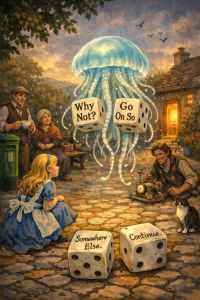
Wonderland Dreaming.

Wonderland Dreaming.

Wonderland Dreaming.

 
Leave a comment

Posted by on December 10, 2025 in dreaming, Wonderland


Tags: ,